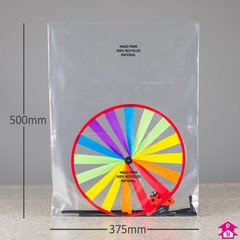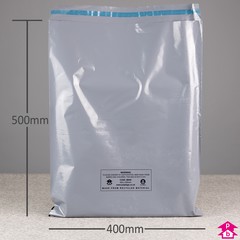
A (hopefully helpful) explanation of the sizes
In the standard format for describing a bag:
For example: if a bag is said to be 4" x 6" x 150 gauge then the bag is 4" wide by 6" long with 150 gauge thickness and the bag will open on the 4" width.
How thick is thick?
| 100 gauge | a 1/1000 of an inch |
| 120 gauge | 'light duty' - good for protective covering |
| 250 gauge | 'medium duty' - good for holding light materials |
| 500 gauge | 'heavy duty' - where strength is required |
Metric and Imperial - a complication!
Most measurements are given in imperial (inches and gauge)
but some of us prefer to use metric scales and the conversions are as follows:
| width/Length | 1" = 25.4 mm |
| thickness | 400 gauge = 100 micron |
For example: a 4"x 6" x 150 gauge bag is the same as a 102mm x 152mm x 37.5 micron bag
Gussets - a complication!
Some bags have a gusset at the sides to help the bag open
out more and enable a greater volume of items to be put in - a good example is
a refuse sack. Others have a gusset at the bottom to enable a wide product to
fit in - a good example is a carrier bag.
We very much hope this helps but if you require any help or have any questions please call 020 8575 8200 and talk to one of our experts!